Noida
September 25, 2026
C-DAC Delhi successfully conducted a five-day training programme from September 21st – 25th, 2026 on "Technological Skills (Advanced AI Tools)" for the Indian Statistical Service (ISS) Probationers of the 2026 and 2024 batches at the National Statistical Systems Training Academy (NSSTA), Greater Noida.
The programme was organized with the objective of enhancing the technological competencies of ISS probationers in advanced applications of Artificial Intelligence, python programming, statistical data preparation and visualization, machine learning, deep learning, generative AI, large language modelsand ethical and responsible AI.
C-DAC Delhi experts - Shri Anurag Singh, Shri Kartike Pushkarna, and Shri Krishan Sharma provided valuable contributions to the training programme through their respective areas of expertise. The comprehensive curriculum was designed to provide the participants with both conceptual clarity and practical exposure to contemporary AI tools and technologies. The training emphasized the application of Artificial Intelligence in statistical analysis, data-driven decision-making, research, governance, and public administration. The training familiarized the participants with the opportunities, challenges, and ethical considerations associated with the use of AI in official and institutional environments.
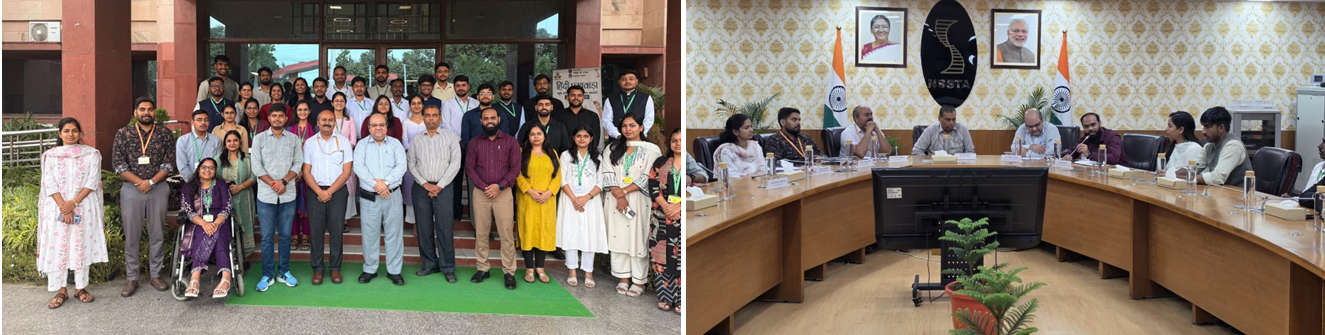
The programme concluded with a valedictory ceremony. Shri R. Rajesh, Additional Director General (ADG), Capacity Development Division (CDD), Ministry of Statistics and Programme Implementation (MoSPI), graced the occasion along with other officials - Shri Vivek Shrivastava, Director, NSSTA, Smt Ruchi Mishra, Deputy Director, NSSTA. Representing C-DAC Delhi were Shri Apoorva Kohli, Scientist E and Group Head-ACTSand Dr. Shoyab Ali, Senior Project Engineer.
In his address, Shri R. Rajesh highlighted the importance of acquiring advanced technological skills for ISS probationers. He emphasized that the knowledge and practical exposure gained through the training would support the participants in statistical analysis, evidence-based policy formulation, data interpretation, and the effective use of emerging digital technologies in their future professional responsibilities.
Certificates were distributed to all the participants during the valedictory ceremony. In their feedback, the participants appreciated the quality and relevance of the training, the practical orientation of the sessions, and the expertise of the faculty members. They described the programme as highly informative and beneficial for developing a deeper understanding of advanced AI tools and their applications in the statistical and government domains.
The successful completion of the programme reflects C-DAC Delhi’s continued commitment to capacity building and technology-oriented skill development for government institutions and public-sector professionals. Through such specialized training initiatives, C-DAC Delhi continues to support the adoption of emerging technologies and promote innovation, efficiency, and the responsible use of Artificial Intelligence in governance and public administration.